Educational Uses of Letter-Number Conversion
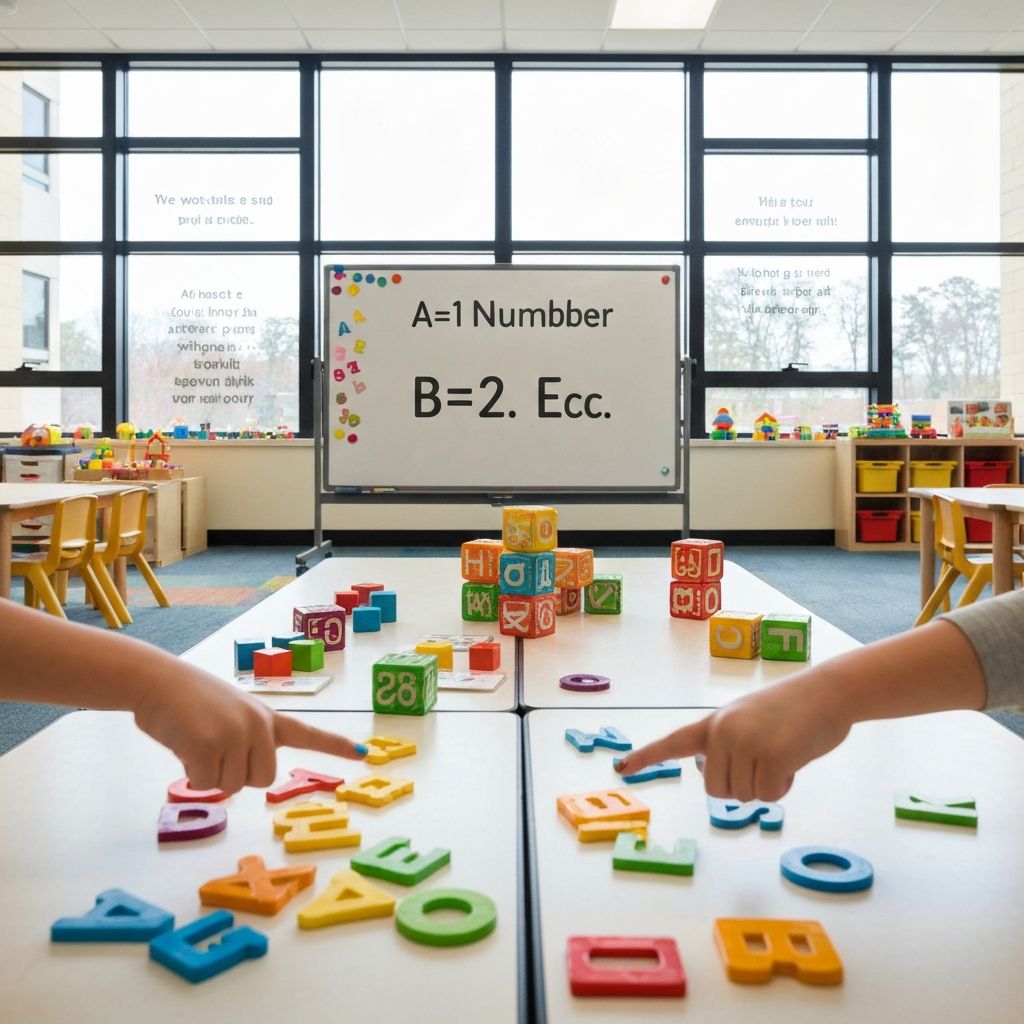
Letter-to-number conversion offers a versatile teaching tool that spans multiple subjects and age groups. From elementary mathematics to computer science fundamentals, this simple concept provides engaging ways to develop essential skills while making learning fun and interactive.
Teaching Mathematics Through Letters
One of the most effective educational applications of letter-number conversion is in mathematics instruction. Teachers use alphabet coding to create engaging arithmetic exercises where students calculate word values by adding letter positions. For example, finding that CAT = 3 + 1 + 20 = 24 combines spelling practice with addition skills.
More advanced exercises involve finding words with specific totals or comparing word values. Students might search for words that equal 100, encouraging both mathematical thinking and vocabulary exploration. These activities develop mental math skills while maintaining student engagement through the novelty of letter-based problems.
Introduction to Computer Science Concepts
Letter-number conversion provides an accessible entry point to computer science concepts. Teaching ASCII encoding helps students understand how computers represent text internally. This foundational knowledge prepares them for programming, where character manipulation is a common task.
Binary representation of letters introduces students to the base-2 number system that underlies all digital computing. Converting letters to binary (A = 01000001) demonstrates how computers store information using only 0s and 1s, making abstract concepts tangible and understandable.
Our letter to number converter supports multiple encoding formats, making it an ideal classroom tool for demonstrating these concepts interactively.
Literacy and Reading Development
For younger learners, letter-number activities reinforce alphabet knowledge and letter sequencing. Assigning numbers to letters helps children internalize alphabetical order while providing additional context for letter recognition. Activities like "find the letter that equals 13" turn alphabet practice into an engaging game.
Spelling exercises become more engaging when combined with number values. Students can be challenged to spell words using only letters that sum to a target number, or to find the highest-value word using a limited set of letters. These activities develop spelling skills while incorporating mathematical reasoning.
Critical Thinking and Problem Solving
Cryptography-based activities using letter-number conversion develop critical thinking skills. Students learn to recognize patterns, test hypotheses, and apply systematic approaches to problem-solving. Decoding simple substitution ciphers teaches logical reasoning and attention to detail.
Creating coded messages for classmates to solve encourages creativity while reinforcing encoding concepts. Students must think from both the encoder and decoder perspectives, developing empathy and communication skills alongside technical understanding.
Cross-Curricular Applications
Letter-number conversion naturally integrates multiple subjects. History lessons might include decoding messages using ciphers from different eras. Science classes can explore how genetic sequences are encoded. Language arts activities might analyze the "numerical weight" of words in poetry or literature.
STEAM education benefits particularly from these connections, as letter encoding bridges language arts with mathematics and computer science. Projects that combine writing with coding, or art with mathematics, become natural extensions of letter-number exploration.
Classroom Activities and Resources
Teachers can implement letter-number conversion in various formats. Worksheet activities work well for individual practice, while team competitions to find the highest-value word encourage collaboration. Interactive whiteboard demonstrations using online converters engage visual learners effectively.
Take-home puzzles extend learning beyond the classroom, and parent involvement increases when families can participate in decoding activities together. The simplicity of the A1Z26 system means no special materials are needed beyond paper and pencil, making these activities accessible to all schools.
Conclusion
Letter-number conversion is a powerful educational tool that makes learning engaging across multiple subjects and grade levels. From basic arithmetic and alphabet skills to advanced computer science concepts, this simple technique opens doors to meaningful, cross-curricular learning experiences.
Classroom Ready Tool
Use our free converter for classroom demonstrations and student activities. Supports multiple encoding types for varied learning objectives.
Open Converter ToolAll Free Tools
View allLetters to Numbers Converter
Convert letters to numbers (A=1, B=2...Z=26) with A1Z26, ASCII, hex, and binary encoding.
NATO Phonetic Alphabet Translator
Convert text to NATO/ICAO phonetic alphabet and other spelling alphabets.
Phone Number Converter
Convert vanity phone numbers like 1-800-FLOWERS to digits using the telephone keypad.
Cipher Identifier
Analyze encrypted text and identify the cipher or encoding type used.