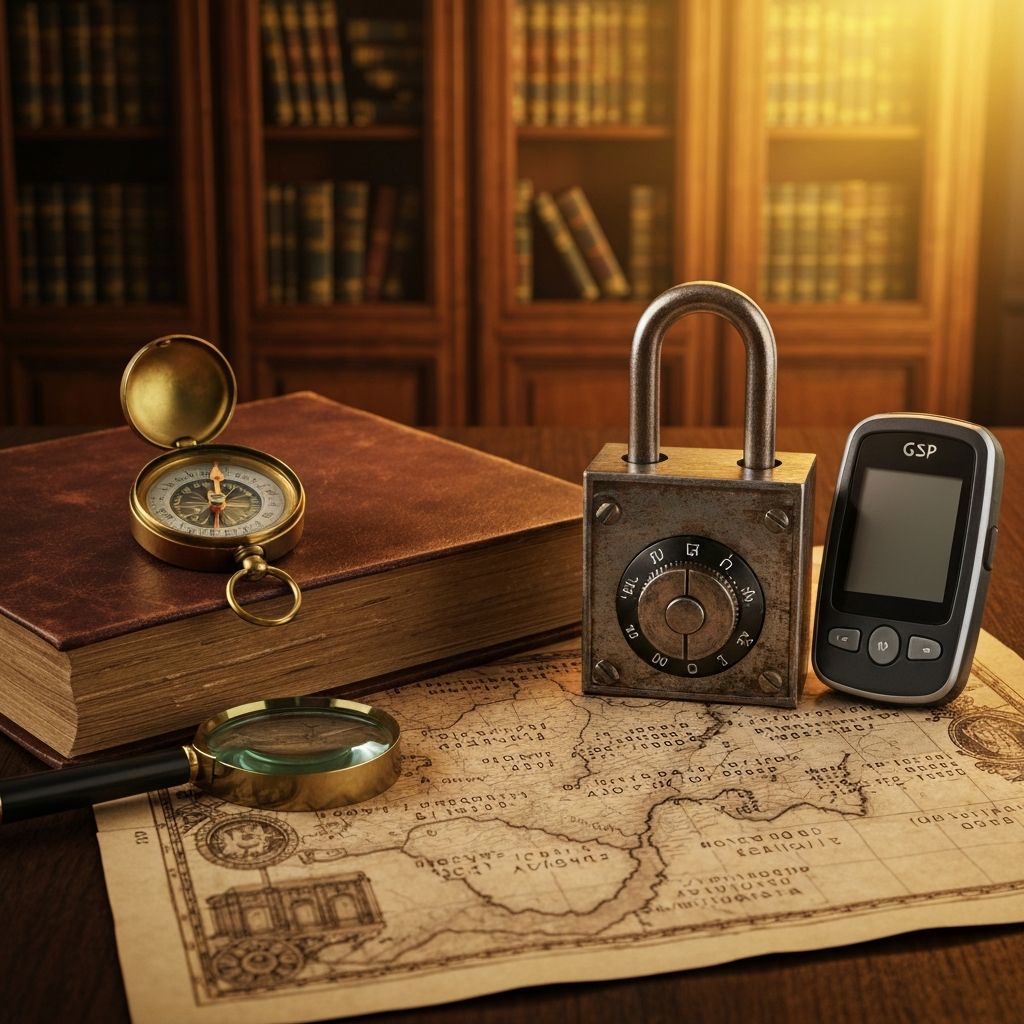
Puzzle Solving with Letter-Number Conversion
Letter-to-number conversion is one of the most common techniques used in puzzles, from geocaching mystery caches to escape rooms and Capture The Flag (CTF) competitions. Whether you are a puzzle enthusiast or just starting out, mastering these conversion methods will significantly improve your solving abilities. Our letters to numbers converter tool is the perfect companion for any puzzle solver.
Geocaching Mystery Caches
Geocaching mystery caches (also called puzzle caches) frequently use letter-number encoding to hide coordinates. The cache owner provides a puzzle that, when solved, reveals the true location. The most common encoding is A1Z26, where each letter corresponds to its position in the alphabet.
For example, a geocache might give you the clue "NORTH FORTY SEVEN" where you need to convert certain letters to numbers to find the coordinates. Using A=1 encoding, N=14, O=15, R=18, T=20, H=8. Puzzle setters often combine letter values through addition, multiplication, or other operations to generate valid coordinate numbers.
Our letters to numbers converter tool is an essential tool for geocachers, allowing quick conversion of clue text to numerical values that can then be used to calculate final coordinates.
Escape Room Puzzles
Escape rooms frequently incorporate letter-number ciphers as puzzle elements. A common setup involves finding a word or phrase that must be converted to numbers to unlock a combination lock. The A1Z26 system is popular because it produces numbers in the 1-26 range, perfect for combination locks.
Some escape rooms use more complex encodings like ASCII values or require multiple conversion steps. For instance, you might need to find a four-letter word, convert each letter to its alphabetical position, then use those digits for a padlock combination.
CTF Challenges
Capture The Flag competitions often include cryptography challenges involving character encoding. Competitors might encounter flags encoded in ASCII decimal, hexadecimal, or binary. Recognizing these formats quickly is crucial for competitive solving.
A common CTF pattern presents numbers in the 65-90 or 97-122 range, indicating ASCII-encoded uppercase or lowercase letters respectively. For example, "67 84 70" in decimal ASCII translates to "CTF". Hexadecimal encoding (43 54 46) and binary encoding are also frequently used.
Common Puzzle Patterns to Recognize
Experienced puzzle solvers learn to recognize encoding patterns quickly. Numbers in the 1-26 range likely indicate A1Z26 encoding. Numbers between 65-90 or 97-122 suggest ASCII. Long strings of 0s and 1s in groups of 7 or 8 are probably binary. Two-digit hexadecimal pairs starting with 4, 5, 6, or 7 often encode letters.
Tips for Faster Solving
Memorize key reference points: A=1, M=13 (middle), Z=26 for standard encoding. For ASCII, remember A=65, a=97, 0=48. These anchors help you quickly validate your decoding approach without checking every character.
Conclusion
Letter-number conversion is a fundamental puzzle-solving skill that appears across many recreational and competitive contexts. Whether you are hunting geocaches, escaping rooms, or competing in CTFs, these techniques will serve you well.
Ready to Solve Puzzles?
Use our free letters to numbers converter tool for quick conversions during your puzzle solving adventures.
Open Letters to Numbers Converter ToolAll Free Tools
View allLetters to Numbers Converter
Convert letters to numbers (A=1, B=2...Z=26) with A1Z26, ASCII, hex, and binary encoding.
NATO Phonetic Alphabet Translator
Convert text to NATO/ICAO phonetic alphabet and other spelling alphabets.
Phone Number Converter
Convert vanity phone numbers like 1-800-FLOWERS to digits using the telephone keypad.
Cipher Identifier
Analyze encrypted text and identify the cipher or encoding type used.